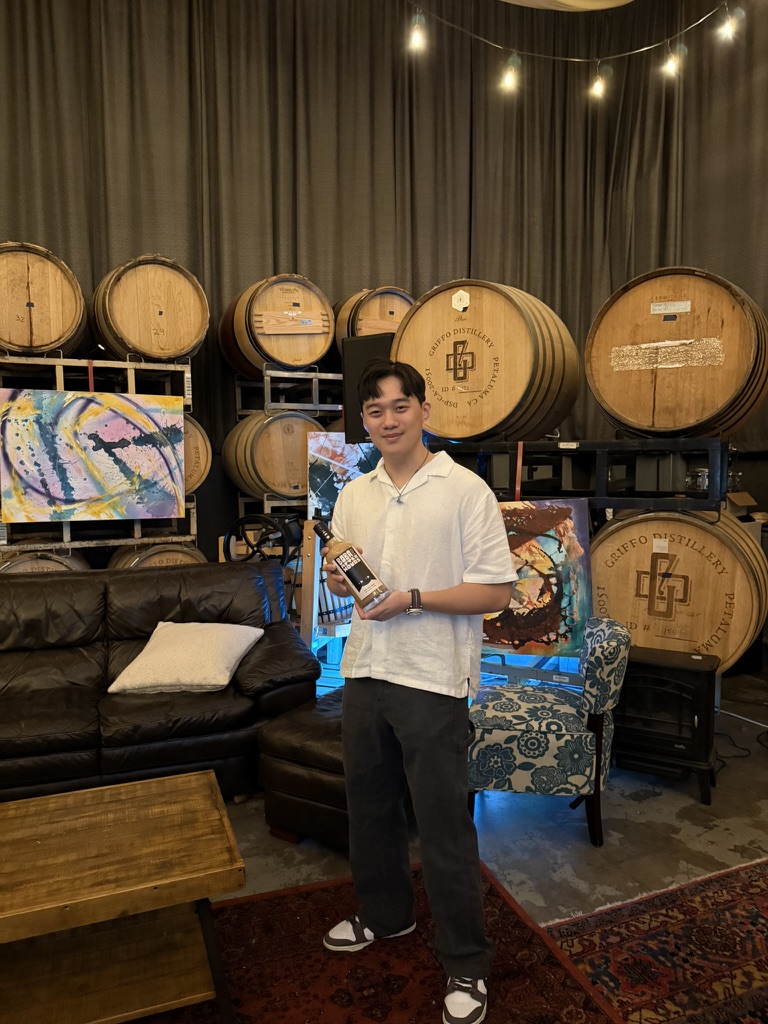
Brandon Hoang thought it would be easy.
He had watched other people make it look effortless. The Nectar guys were everywhere that year, blanketing the city with hard seltzers and guerrilla marketing. Alcoholic boba was having a moment, and every version he saw looked less like a business than a dare. How hard could it really be? "I could do something too," he remembers thinking. "It wouldn't be that bad, would it?"
It would be that bad.
"And then it was horrendous," he says. "It was so bad."
But the drink was never the point. To understand why a college kid would spend the next nine months, and nearly every dollar he had, fighting to keep milk, tea, and alcohol alive in the same bottle, you have to go back to what he was really trying to recreate. Not a product. A feeling.
It started at a boba table
Growing up, boba was how Brandon's world came together. "Our parents would drive us all to Sharetea, or Over the Rainbow," he says. "We'd just chill there for like two hours, play cards, talk." He was the quiet one, happier watching than performing. But those tables stayed with him. "Being tightly connected with other people, I was like, oh, I actually really like that feeling."
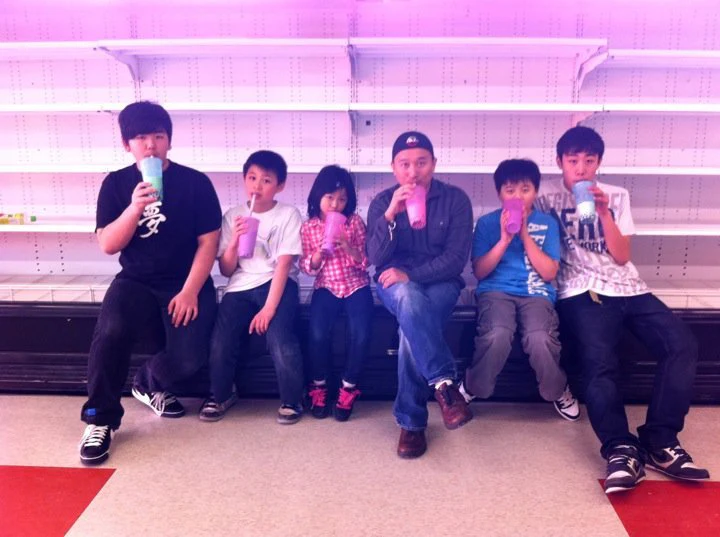
It followed him into high school. Introverted and new, he met his first real friends at tennis practice. "After that, we got boba, and that solidified the bond. And then we just kept getting boba, more and more." Ask what he remembers and it is never the drink. "I don't really remember the exact beverage I got. I remember where we sat." He laughed along before he was brave enough to make his own jokes.
Years later, the culture started to agree with him. Nightlife was drifting away from the blackout and toward something calmer: mahjong nights, pickleball, a couple of cocktails and an actual conversation. There is a time and place for getting wrecked, he says. "But we can do things more calm, and still enjoy it to the same level."
It's a little bit alcoholic, but it's not going to get you wasted. Real milk, real tea. It's not something you drink just for the feeling. You drink it, and you actually enjoy what you're drinking.
A drink made for the table, not the hangover.
A cool cup and a sticker
The idea arrived the way most modern ideas do: uninvited, on a feed. He would scroll past the bar boba, then see it again two weeks later, then again a month after that. "It kept popping up on my page. And I was like, what if I do this?"
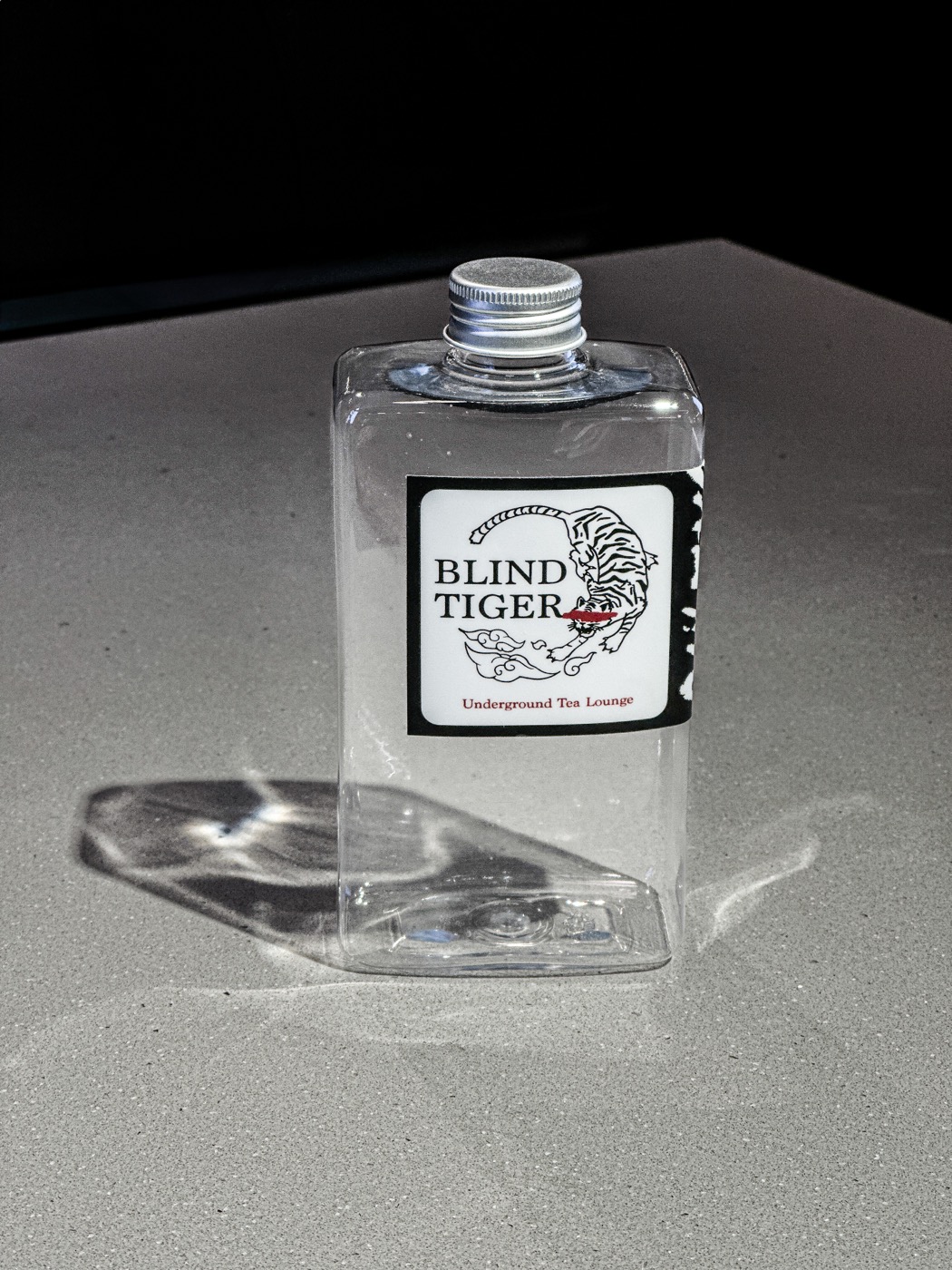
He did not, by his own account, overthink it. "I did some research on Alibaba. A cool cup and a sticker, that's all I need to start the business." He ordered 300 containers and 300 stickers, and handed the branding to a friend with an unusual qualification: "He was really into making fake IDs, so he was really good with graphic art."
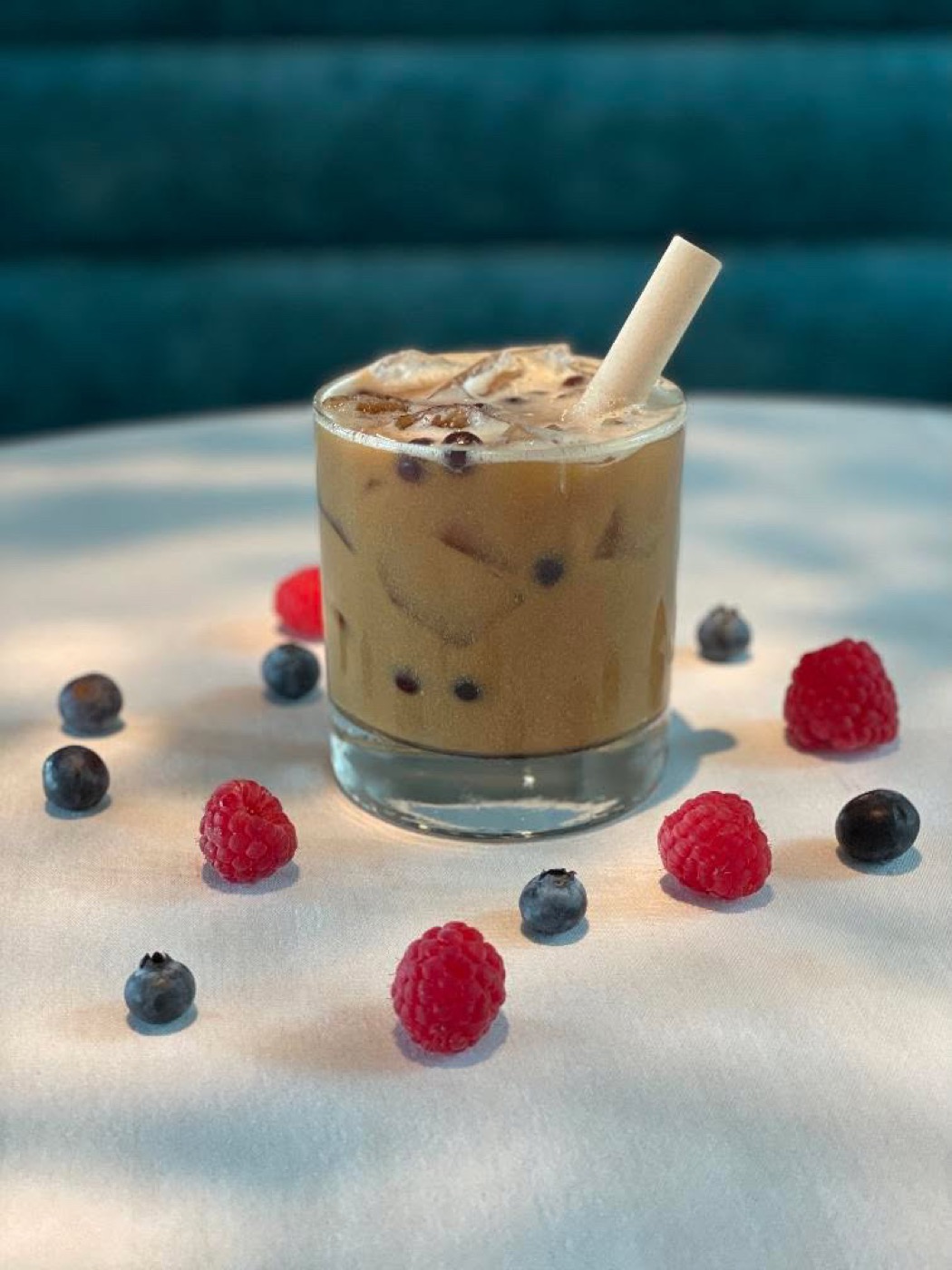
Then he forgot about it. "I ordered it, forgot about it, and then it came. Oh, right, I was going to make it." His first product was a boba he bought at Sharetea with a shot of whiskey stirred in. "Yeah," he decided. "This is pretty good."
The Gatorade cooler days
What followed was less a business than a very committed hobby. It ran on Costco runs ("Hey, we've got to go to Costco") for Jameson and a Costco-brand Irish cream, plus powdered black milk tea and taro. The production line was a stock pot, "the kind you'd cook a ton of beef broth in," a Gatorade cooler, and no recipe whatsoever.
"We'd pour a little out, taste test, pour a little out, taste test," he says. "And by the time we said this is perfect, we'd all be kind of drunk, because we'd been tasting it so much." The quality control had a flaw. Sober the next morning, the drink was somehow far too strong; a night of tasting had worn out their ability to detect alcohol at all. One early batch got stirred with a wooden spoon too short to reach the bottom of the pot, so every bottle came out stronger at the bottom than the top.
The batches took over their lives, and their fridge. "Our entire fridge would just be full of boba. We didn't have anywhere to put our meat, our vegetables, whatever else we needed to eat." The recipe itself was almost too simple: whenever they couldn't taste the tea, they added more tea powder, again and again, until it was sweet enough to bury the alcohol completely. "People like sweet things," he shrugs. Jameson made the cut for a reason that sounds invented but isn't. Whiskey and tea are both a little woody, so they belonged together.
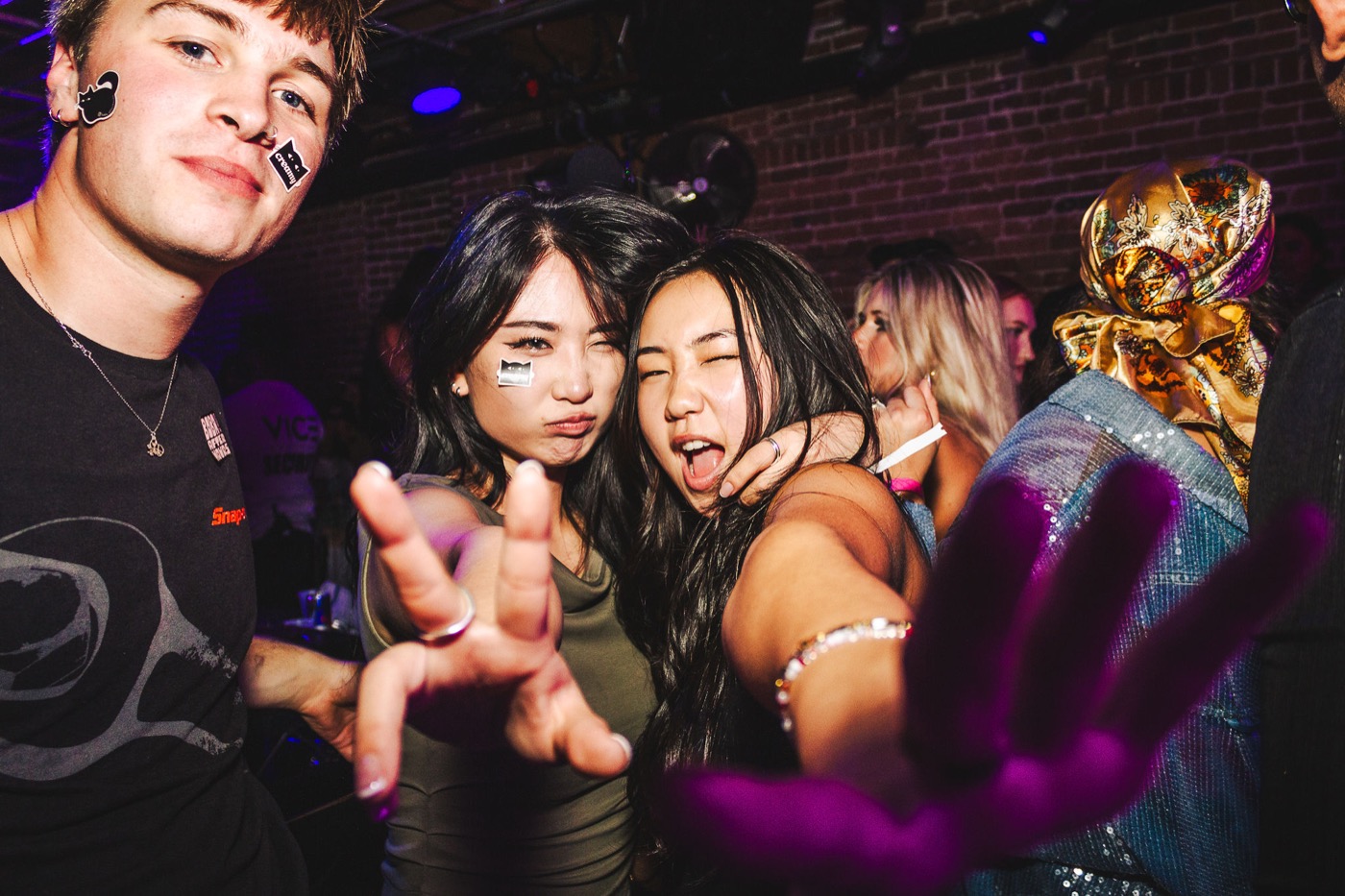
He sold it at parties, twelve dollars a flask, while he DJ'd.
A whole group of friends would buy one bottle. One person takes a sip, this is really good, this is dangerous, and it passes around the whole circle until it's gone. Then they'd come back and buy four more.
The same faces, all night, coming back. Selling out fast. From the booth he could watch it move through the crowd: his drink in someone's hand, a toast, a tag on Instagram. "I have a good time because they're having a good time," he says. Somewhere in there, the hobby quietly became a hypothesis. "That's when I thought, okay, there's actually a market for this."
The $300,000 wall
So he tried to make it real. That is when the fun ended.
A drink you brew under the table for your own party answers to no one. A drink you put on a shelf answers to everyone. Every time Brandon changed the recipe, federal rules made him refile the paperwork, which he ended up doing four or five times. His first attempt at going legit was a $1,000 canning machine: seal it, ship it, done. "But it turns out milk has bacteria in it. It goes bad. I opened my first can, and it smelled awful."
The chemistry only got crueler. A food scientist he cold-called at Washington State walked him through it. Picture a spectrum, the professor said. At the sour, acidic end, drinks keep. At the strong, boozy end, drinks keep. It is the soft middle where things spoil, and Brandon's blend of milk, sugar, and real tea sat dead center in the danger zone. He tried nudging it toward safety with a little acid; the milk curdled.
There was an industrial fix, a process that flash-heats the milk to kill the bacteria without cooking it. He called a company that could do it. The quote came back: $300,000, and that was only the minimum order. At that volume the math flipped upside down; he would have been paying to lose money on every bottle. Worse, the heat dulls the flavor, which is exactly why canned milk tea never tastes like the real thing.
He could not come close to affording it. He had made his money the unglamorous way, working as a real estate broker since 2019 and riding the post-COVID housing rush to his first $100,000 by 21. He was careful with it: he didn't travel, most of his friends were broke, so he let it sit. The first batch of Boba After Hours had already swallowed $20,000. "That ended up being almost everything I had."
Nine months in, staring at a number he couldn't pay, he hit the wall every founder eventually meets. "At that point I was lost," he says. "Is this even possible? Should I just give up?"
The way through
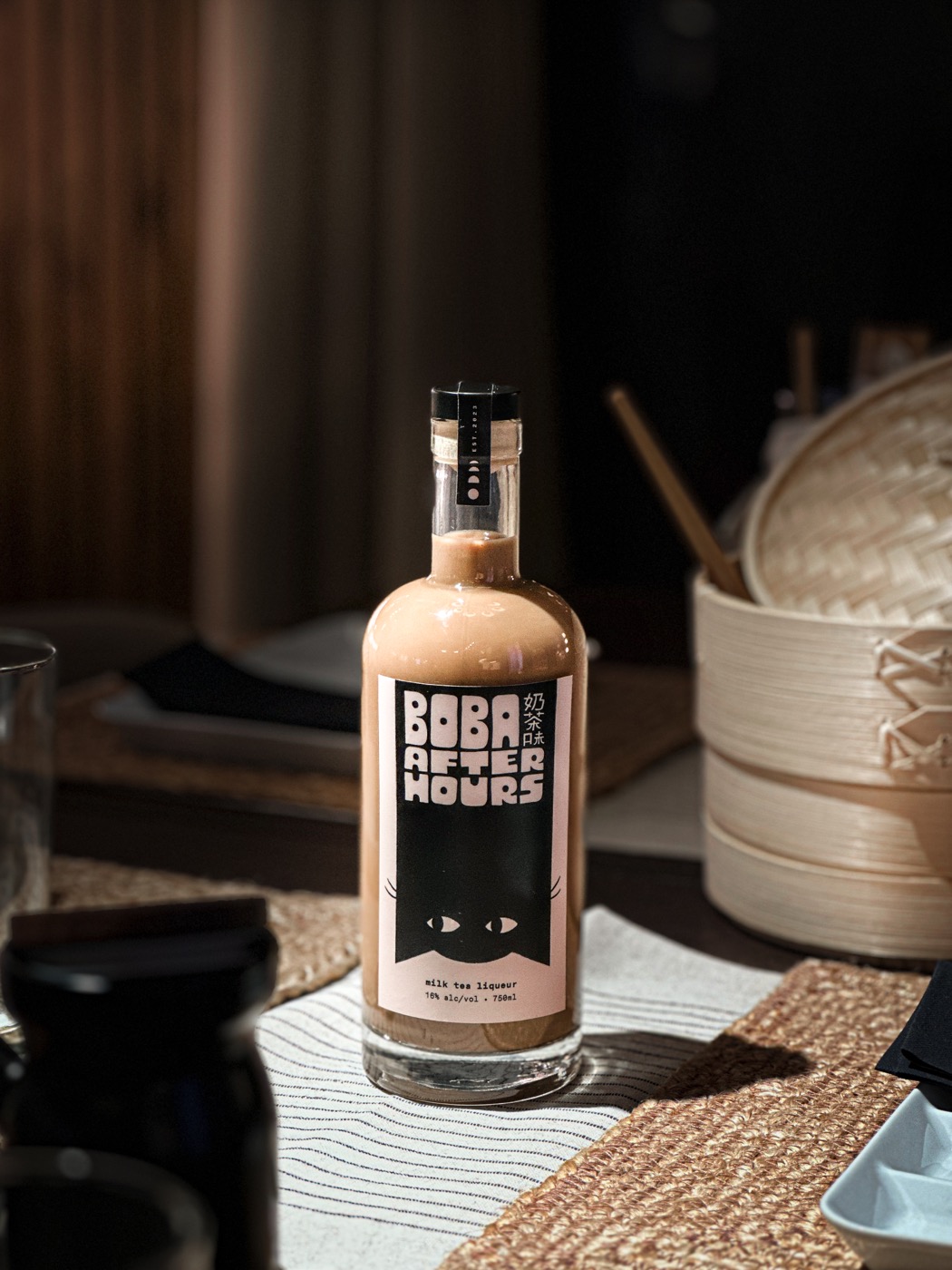
He didn't. He just kept dialing. An entrepreneurship class had connected him to people who had built real brands, and they connected him to others, until one of them finally handed over the answer the expensive route had been hiding. He didn't need the $300,000 machine. The alcohol already in the bottle could do the preserving itself, as long as the milk, tea, and spirit were blended long enough, a full week, to lock together instead of separating. Stir it fast with a spoon and the layers split, milk on top, alcohol on the bottom, spoilage close behind. Give it time, and the alcohol protects everything. Cheaper than the machine, and better tasting.
"Nine months into it, I'm like, finally, this is possible," he says. "That was the moment I said, let's go all in."
No $300,000 machine required. The alcohol was the preservative all along.
Going all in did not make it easy. The first real batch poured out of the box the color of yellowish milk, thick as ketchup. He sent it back, doubled the tea, sent it back, doubled the tea again. One version swapped real tea for cheap powder and tasted like a mistake. He finally settled on a blend of real tea and a touch of the old artificial flavor, tuned to taste like the corner-shop milk tea he grew up on. "Exactly like the milk teas you had as a kid," he says.
How is it making it?
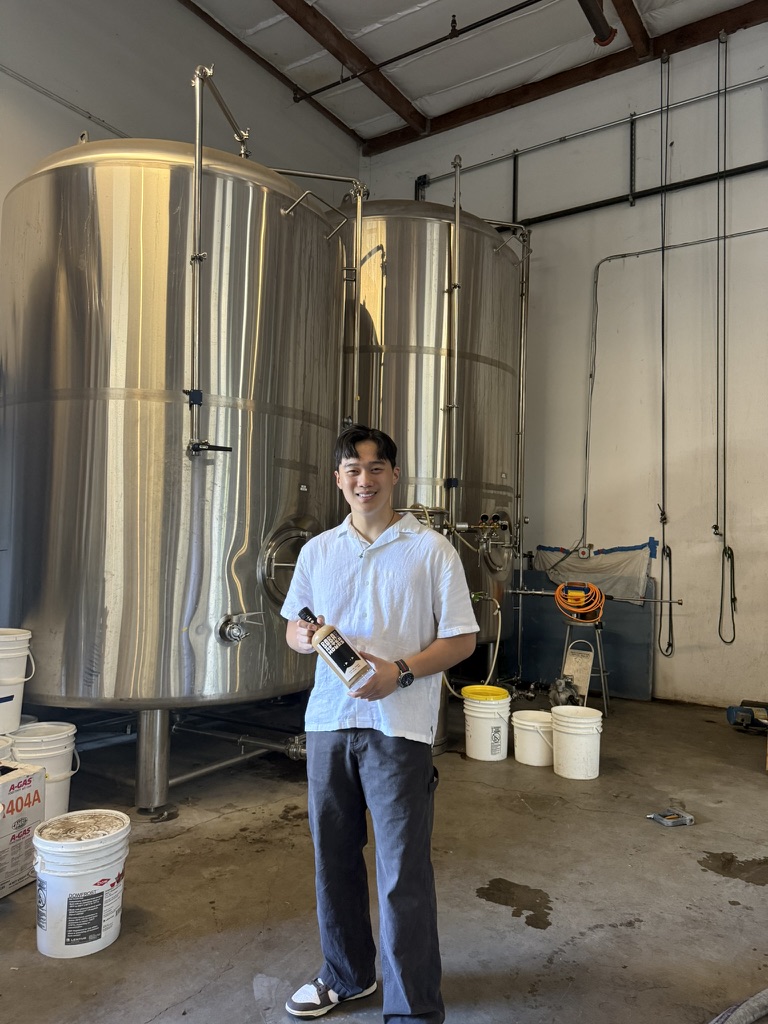
Here is the part that still gets him. Before he had manufactured a single sellable bottle, Brandon had already pitched his way into distribution, standing in front of a serious distributor holding a handmade glass bottle with a label he had printed at a sticker shop. "I kind of felt like a kid," he says. "But looking back, I must have been pretty cool." A friend's mom who managed an H Mart helped get the bottles onto real shelves; the very first store to carry it was his parents' grocery store. When the first commercial batch was finally mixed, he and his friends drove to the co-packer just to watch it happen and taste it from the tap.
Then came Dabin. Brandon had heard the DJ at raves and on Spotify; his friends played him constantly. When a sponsorship came up, he braced for a number he couldn't cover. "I was expecting like 20 or 30 thousand dollars. But he said, okay, $2,000." They flew to California, set up a booth, and handed out samples at a private event full of people far more famous than Brandon realized. An actor named Jack Falahee, hesitating over his million-plus followers, posted the drink anyway. "I had no idea who he was," Brandon admits. The followers poured in regardless.
At the end of the night, Dabin walked over to the booth, took a picture with the bottle, and asked Brandon how he had pulled it off. How is it making it?
"I still remember when I was struggling to even get a product out," Brandon says. "And here we are, one of the most famous DJs in the world, and he's taken an interest in me."
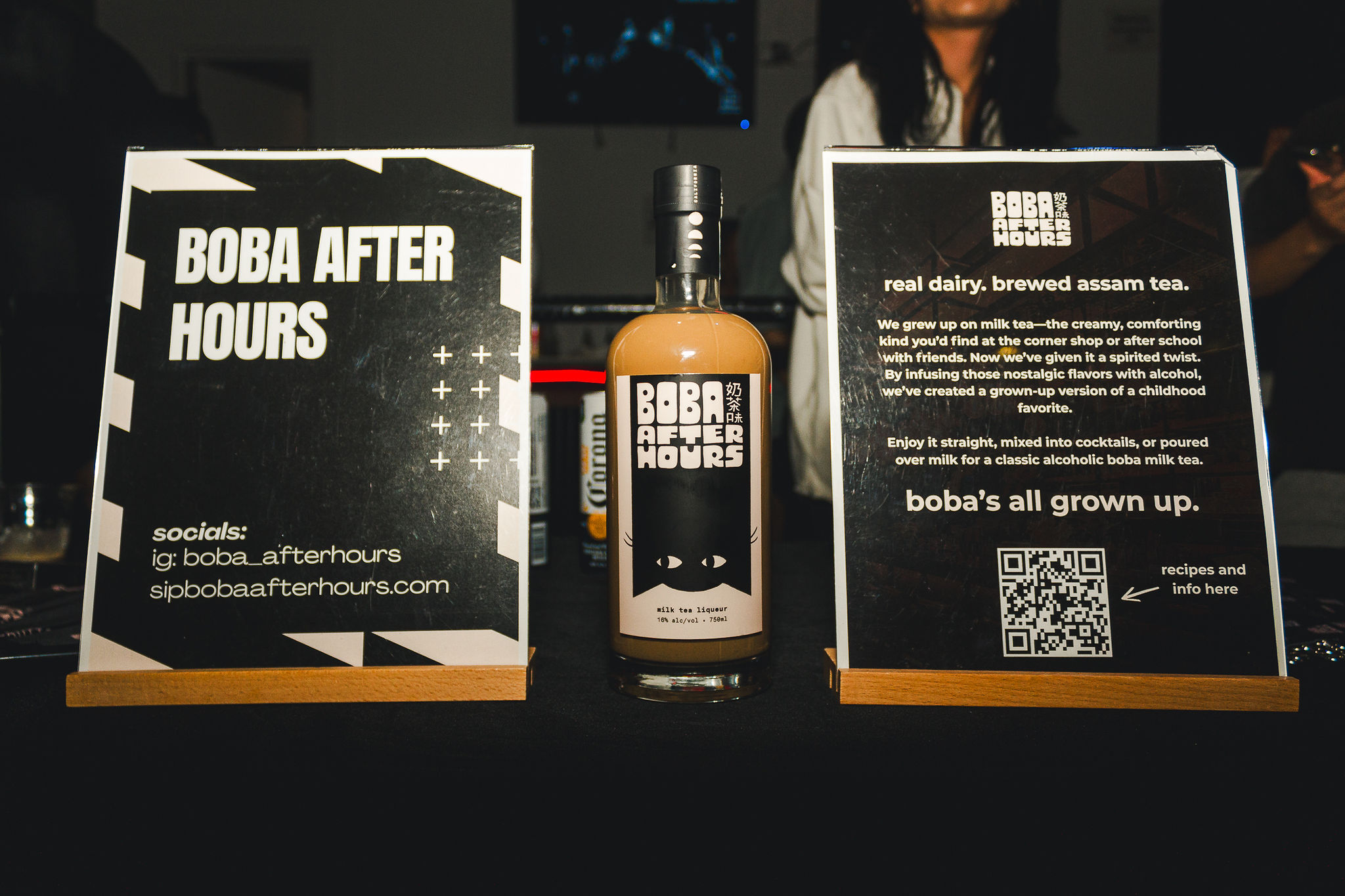
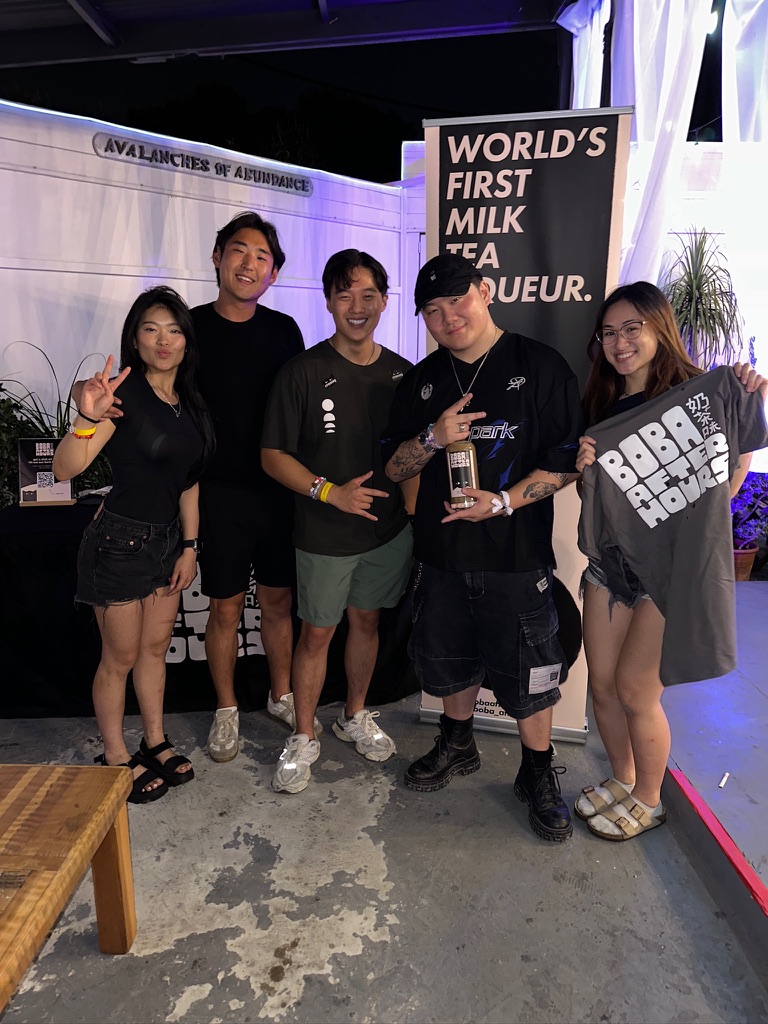
Ask what he would tell an eighteen-year-old version of himself and the answer isn't about chemistry. It is about people. "Be more open to new perspectives," he says; he learned most things the hard way, by being stubborn. And this: "Your network is your net worth." The trick, he found, is not to flatter powerful people but to be real with them. "They want someone who's genuine. They want a friend."
He is already looking past the bottle: cans for festivals, more flavors, eventually a non-alcoholic version for a world he sees turning more health-conscious. "Alcohol with good experiences still has a place," he says. "But drinking until you're dead is starting to die out." For now, with shelf space locked up by the Baileys and Jamesons of the world, he is skipping the gatekeepers and selling straight to drinkers online. The banner behind his booth stakes the claim in white block letters: the world's first milk tea liqueur. Underneath the branding, though, it is something simpler, what the label calls boba, all grown up: the creamy corner-shop milk tea of childhood, poured now for the people who grew up on it.
None of it, though, is really about alcohol. It is about the same thing that hooked a shy kid at a boba table years ago. A group of friends, one bottle, a sip passed around the circle until the night actually begins.
So. How hard could it be?
"It was horrendous," Brandon says. "It was so bad."
He built it anyway.
The world's first milk tea liqueur, shipping direct to your door.